Turtle Tanks Island Systems INC

Drain field Replacements
Drain Field Replacement Services Across Vancouver Island
One of those issues that doesn’t resolve itself is a failing drain field. After the soil around distribution pipes has filled with biomat, the thick layer of biological growth that results when a field receives more effluent than it can absorb, the absorption capacity that allows the field to function is lost. At Turtle Tanks Island Systems, the drain field replacement is a comprehensive and well-designed procedure that takes into account the reasons the field failed, rather than just the obvious problems associated with that failure.
Reading the Signs: How a Failing Drain Field Presents Itself
Most property owners across Vancouver Island recognise that something is wrong with their septic system long before they understand what is actually happening underground. The signs of drain field failure are distinctive once you know what to look for. The initial signs are often slow drains throughout the house that won’t respond to routine drain clearing. This backup of effluent through the system is caused by a decrease in the absorption capacity of the drain field. If the ground above the drain field is wet and spongy, especially after rain or when it is very wet, it means that effluent is coming to the surface, not going into the soil. If the drain field shows any of these signs, it has reached or exceeded the limits of its ability to function effectively: odors persist around the drain field, grass grows faster and greener right above the field lines than the surrounding grass, and sewage backs up into the lowest fixtures in the home. Understanding these signs early is what determines whether drain field repair and replacement can be planned and executed properly or whether the situation has become urgent enough to affect daily life on the property.
Why Drain Fields Fail: The Causes Behind the Symptoms
Septic drain field replacement done properly starts with understanding what caused the failure. Replacing a drain field without addressing the underlying cause produces a new field that fails for the same reason, often faster than the original because the surrounding soil has already been affected. The most common causes of drain field failure on Vancouver Island properties include biomat accumulation from solids passing through a tank with failed baffles or an absent effluent filter, hydraulic overloading from household water use that consistently exceeds the field’s designed daily flow capacity, physical damage from vehicle traffic or heavy equipment operating over the field area, root intrusion from trees and shrubs planted too close to the field lines, and soil compaction that has reduced the permeability of the receiving soil below the level needed for adequate absorption. Our assessment process identifies the specific cause before any replacement work is scoped or priced. That assessment is what makes the replacement solution durable rather than temporary.
Drain Field Replacement Across Black Creek, Fanny Bay, Deep Bay, Dashwood, and Parksville, BC
Septic leach field contractors working across Vancouver Island encounter different site conditions in each community, and our replacement approach reflects those differences. In BC rural properties, particularly in the Black Creek area, many fields are older and were installed at a time when regulations and design were less strict. The septic field replacement services around here often involve replacing faulty or undersized fields with a properly engineered field that complies with the current requirements of the BC Sewerage System Regulation. Near coastal areas and environmental sensitivity at water bodies in Fanny Bay, BC also has unique demands in relation to field placement and system type selection for replacement options. Drain field restoration activities in this area are performed with care for compliance with setback and environmental protection criteria that are applicable near the coast. Deep Bay, BC, has high water table conditions that directly influence the design and installation of replacement fields. The field elevation and separation from seasonal groundwater must be considered during septic drain line replacement here to ensure that the replacement field has enough unsaturated soil depth year-round. In Dashwood, BC, variable soil permeability across the area means replacement field sizing cannot be assumed from neighboring properties; each site is assessed independently. And across Parksville, BC, septic field upgrade services cover everything from straightforward residential field replacements through to larger leach field replacement projects for commercial properties where daily flow volumes and regulatory documentation requirements are more involved.
How Drain Field Replacement Is Carried Out
Leach field replacement at Turtle Tanks Island Systems follows a structured process from initial assessment through to final inspection.
Site Assessment and Design
Before excavation begins, the site is assessed to confirm the cause of the failure, evaluate the condition of the existing tank and distribution components, and identify the optimal location for the replacement field. Where the original field location is suitable for replacement once failed material is removed, we work within the existing footprint. Where site conditions or regulatory requirements call for a new field location, we identify and design for that alternative within the property’s available space.
Excavation and Removal
Drain field excavation services cover the careful removal of failed distribution pipe, contaminated aggregate, and biomat-affected soil from the original field area. Excavation is carried out to the depth required to reach unaffected soil capable of supporting a new absorption field. Contaminated material is handled and disposed of in compliance with BC environmental requirements.
New Field Installation
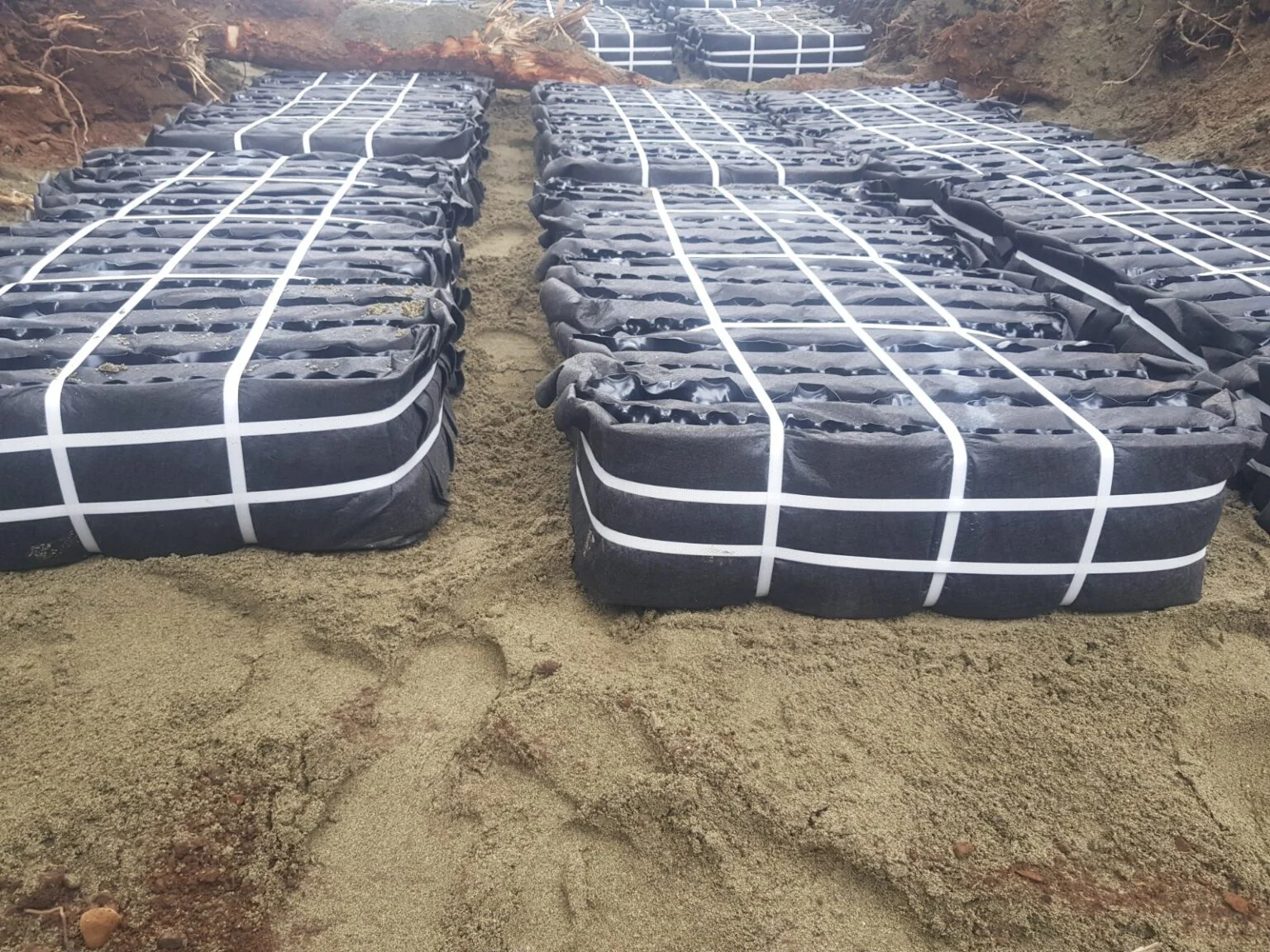
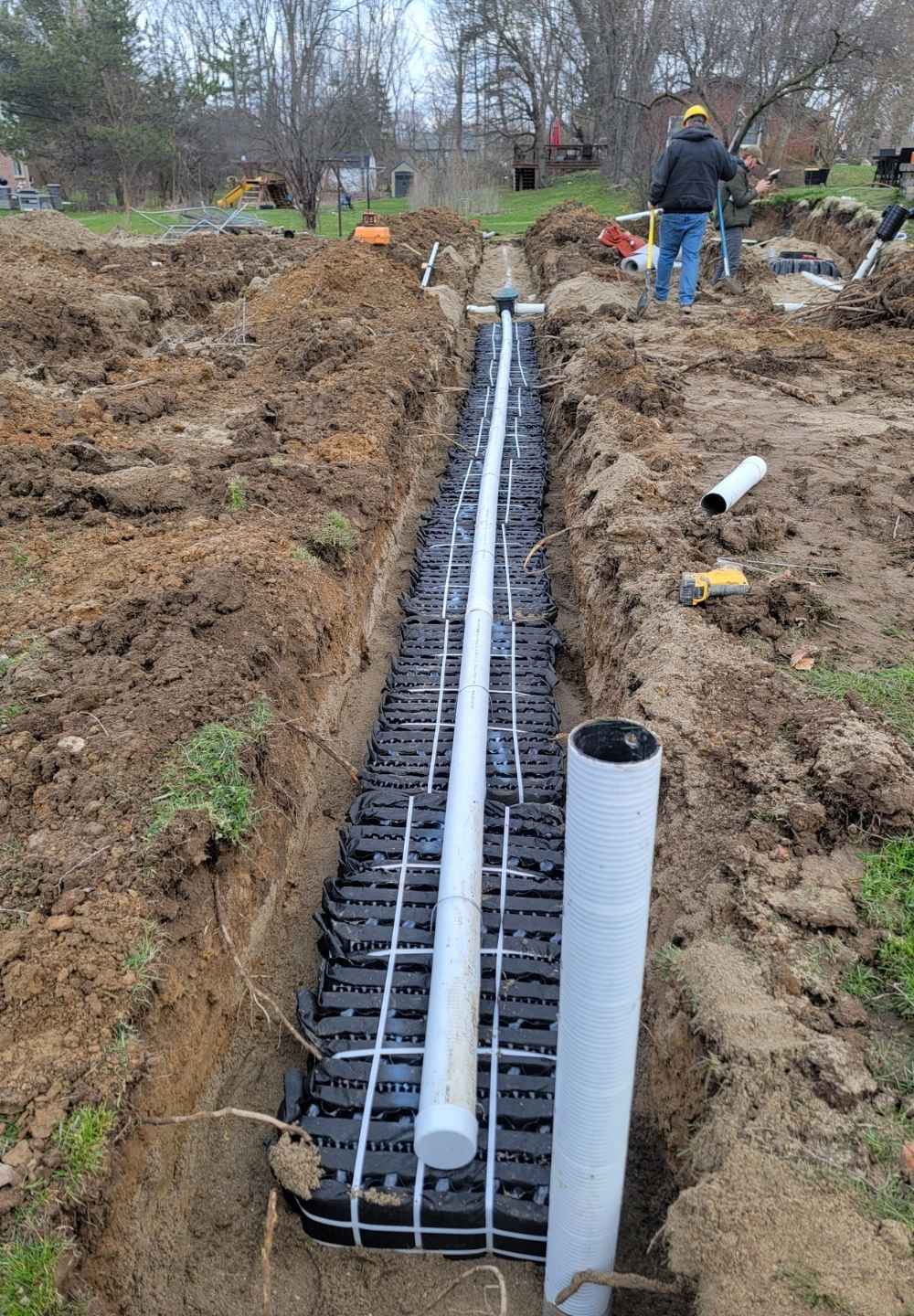
Leach line replacement involves laying new perforated distribution pipe on a correctly graded aggregate bed, wrapped in geotextile filter fabric to prevent fine soil particles from migrating into the aggregate layer over time. Pipe gradients are set to achieve even distribution across the full field area rather than concentrating effluent loading at the inlet end of the system. The aggregate layer is brought to the specified depth, geotextile is placed over the top, and native soil is used for the final cover to the depth required by the approved design.
Septic absorption field replacement also includes inspection and, where necessary, replacement of the distribution box or manifold that connects the tank outlet to the field lines, ensuring the new field receives effluent evenly from the start rather than developing uneven loading patterns that shorten field life.
We serve in these areas: Black Creek, Fanny Bay, Deep Bay, Dashwood and Parksville, BC
Get in Touch About Your Drain Field
Whether your field is showing early warning signs or has already failed, the right starting point is an honest site assessment. Contact Turtle Tanks Island Systems today at +1 (778) 770-5606 to discuss your property and find out what your drain field replacement involves before any work begins.